
STRATEGY · 8 skills
Productprint Engine
Writes the $50K-grade product strategy thesis — positioning, roadmap, and a pre-mortem that attacks its own load-bearing assumption — in one run.
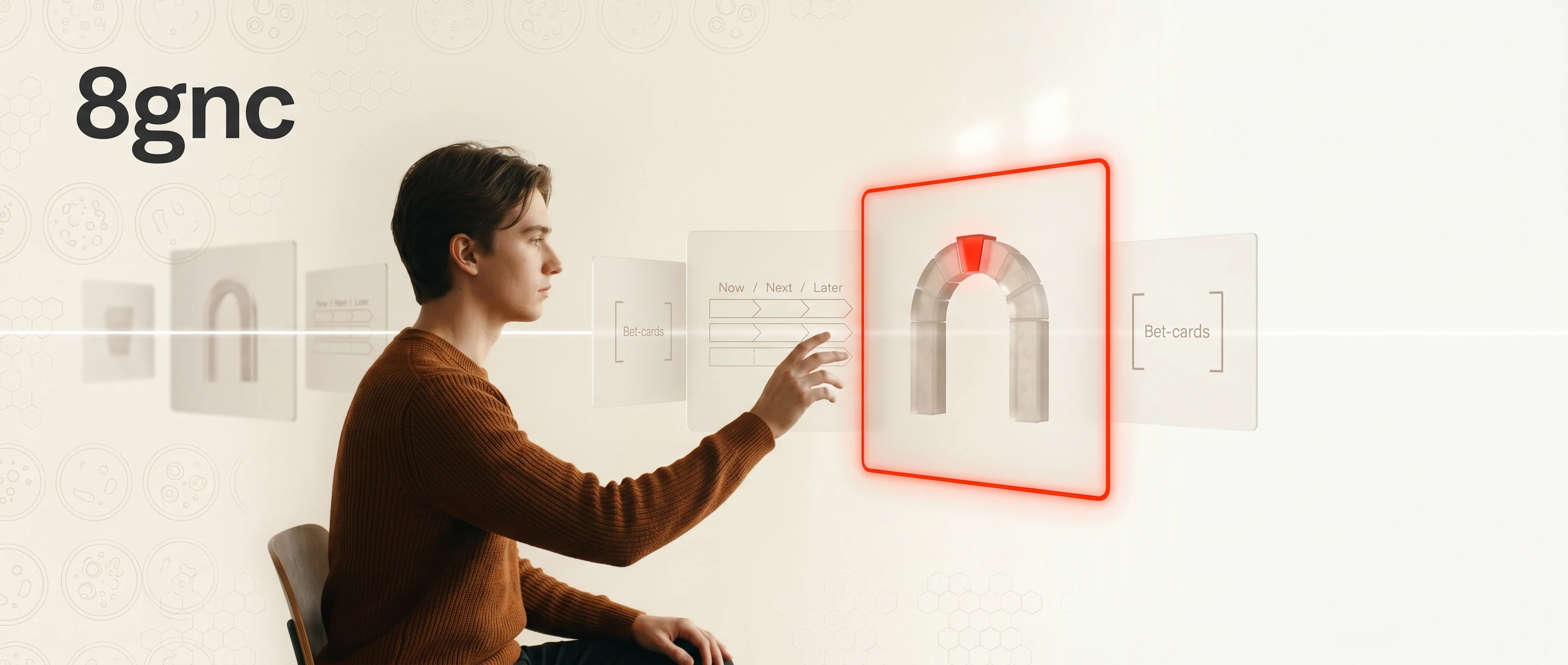
Productprint Engine produces the Integrated Product Strategy Thesis that McKinsey, Bain, and BCG charge $50K–$200K for — the Playing-to-Win cascade, a Now/Next/Later roadmap, deployable positioning, and an adversarial pre-mortem that falsifies the strategy's load-bearing assumption before you commit. One-time $99 — a founding price.
Runs as a Claude plugin
Built for Claude: Claude Code (CLI + desktop) and Claude.ai web (Cowork). They work best in Claude Code. Universal via the open SKILL.md standard — also Cursor and Codex CLI.
/plugin marketplace add <repo># register the marketplace/plugin install <name># install the plugin's skill chainProduces a consulting-grade Integrated Product Strategy Thesis — the where-to-play / how-to-win deliverable McKinsey, Bain, and BCG charge $50K-$200K for. Positioning and a Now/Next/Later roadmap both fall out of one coherent strategy, and an adversarial pre-mortem stress-tests it before you commit. PDF and HTML output.
- ▸Builds the whole Playing-to-Win cascade from researched evidence
- ▸Outputs positioning AND a sequenced Now/Next/Later roadmap
- ▸Finds the one assumption that, if false, kills the strategy — then tries to break it
- ▸Tells you PROCEED, or rebuilds the thesis around what survived
How it works
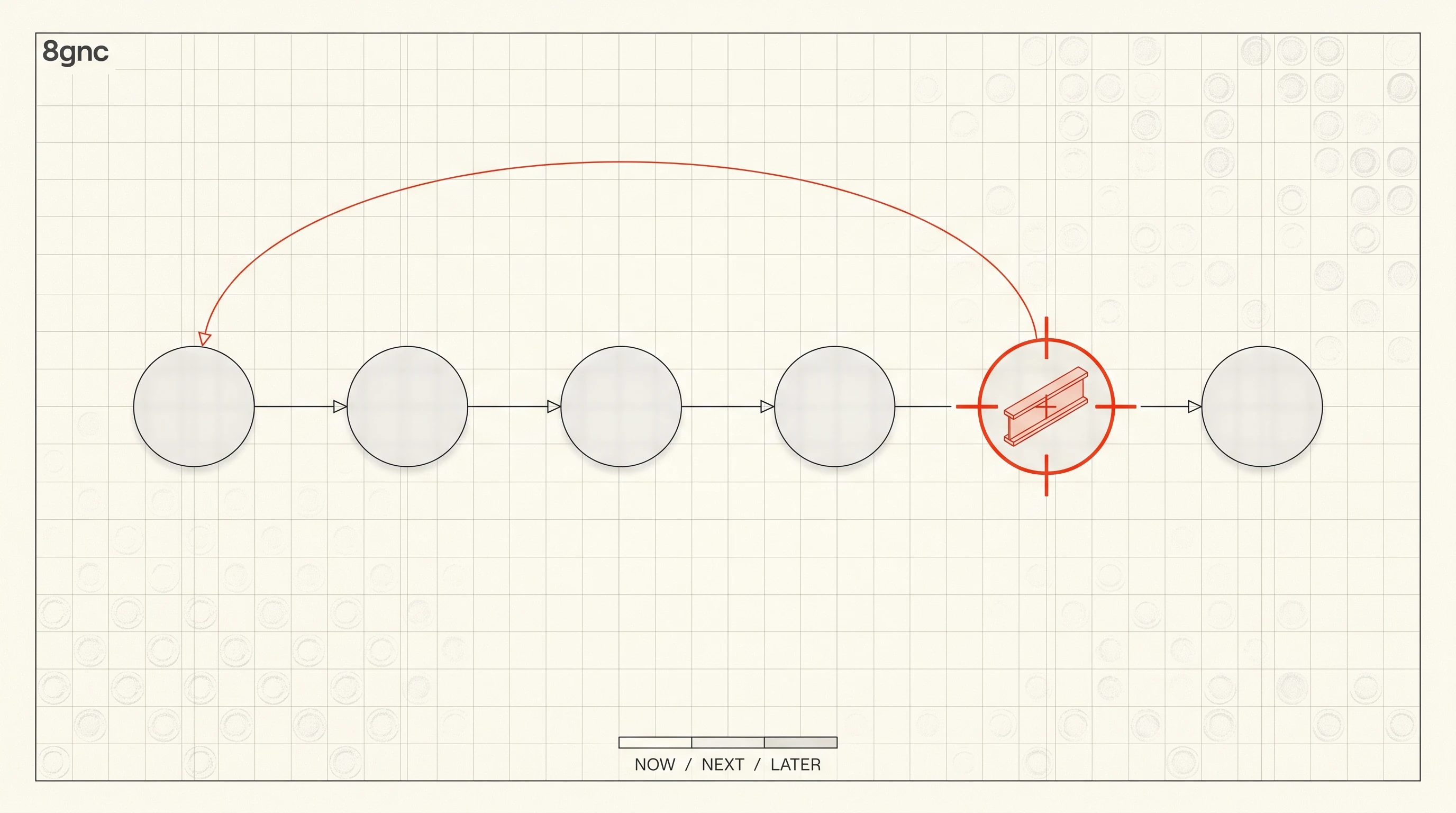
What’s in the box · 8 skills
productprint-engine-guide
The operator's manual — what order to run everything, what each layer feeds the next, the two-pass loop, the mode and skin dials, where to start.
core-strategic-truth
Layer 1. Researches the market until it lands the one foundational tension the whole strategy resolves — the forced trade-off buyers can't escape and no one's solved.
productprint-tier-a
Layer 2. The Playing-to-Win evidence base: winning aspiration, where-to-play map, how-to-win hypothesis, market sizing, JTBD, competitive capability teardown, economic engine, the differentiation wedge — every element evidence-gated.
productprint-tier-b
Layer 3. Turns the strategy into a sequenced plan: testable bets with kill-criteria, the Now/Next/Later roadmap with stated sequencing logic, build-vs-buy-vs-partner, prioritization, and a risk register with leading indicators.
productprint-tier-c
Layer 4. The deployable artifacts: positioning statement, the ≤25-word product one-liner, the narrative that tells the story of the roadmap, and the whole strategy on a page.
thesis-stress-test
Layer 5. The adversarial pre-mortem. Extracts the load-bearing assumptions, ranks them by fragility, and tries to FALSIFY the ones holding everything up. Returns PROCEED if they survive — or REFINE, rebuilding the thesis around what's actually true.
deep-research
The research engine under all of it — multi-source, citation-tracked, verified. This is where the cited evidence behind every claim comes from.
strategy-thesis-compiler
Layer 6. Compiles every layer into the client-ready Integrated Product Strategy Thesis — PDF and HTML, with the assumption-test log and full bibliography included.
Sample output
What the report ships with — 11 sections, every claim sourced.
- 01Executive Summary
- 02Market Context
- 03Core Strategic Truth
- 04Where-to-Play / How-to-Win Cascade
- 05Competitive Moat & Capability Map
- 06Prioritized Roadmap — Now / Next / Later
- 07Positioning & One-Liner
- 08Economic Model
- 09Risk Register & Leading Indicators
- 10Assumption-Test Log
- 11Source Bibliography
Questions
How is this different from the Brandprint Engine?
Same harness, different question. Brandprint answers 'who are we and why do we matter' — a brand strategy report. Productprint answers 'what do we build, for whom, in what order, and is the strategy actually true' — an integrated product/platform strategy thesis where positioning and a sequenced roadmap both fall out of one Playing-to-Win cascade.
What is the thesis stress-test?
The part most strategy decks skip. After the thesis is built, Layer 5 extracts its load-bearing assumptions, scores which one would collapse everything if it's wrong, and runs research specifically to DISPROVE it. If it survives, you get PROCEED. If it breaks, the engine rebuilds the thesis around what's actually true — so you find the fatal flaw before the market does, not after.
Does it work for a product that already exists, or only new ones?
Both. Run it greenfield (research-only) for a new product or category bet, or in existing-product mode — where it ingests your own telemetry, customer interviews, roadmap docs, and loss reasons and weights them above outside research, then stress-tests the strategy against your real data.
Does it need a paid research API?
No. The research runs on Claude's built-in web search by default — no extra account. Power users can optionally install the open-source search-cli and bring their own Brave / Serper / Exa keys for deeper pulls, and weasyprint (a free local install) renders the PDF. None of that is required to produce the thesis.
Is there a guarantee?
Yes — ship-it-or-refund, 14 days. Run the engine and ship a board-ready product strategy thesis in your first session, or get a full refund within 14 days. We can offer that because the deliverable is real and reproducible: you'll know inside one run whether it's worth it.
What does a single sales-agent template cost by comparison?
Automation marketplaces charge $147–$197 for one agent template. Productprint is ten chained skills that ship a board-ready strategy thesis — the deliverable shape McKinsey, Bain, and BCG charge $50K–$200K and a full quarter to produce. This isn't a prompt pack; it's the engine that replaces the strategy engagement.
After you buy
- 01Polar emails you a receipt plus a GitHub repository invite for each plugin you bought.
- 02Accept the invite — you become a collaborator on the private repo.
- 03Run /plugin marketplace add and /plugin install <plugin> in Claude Code (or ask Claude.ai web to install).
- 04When updates ship, run /plugin update. The bundle adds a sixth invite to the master marketplace — install everything from one namespace.
No GitHub account? It's 60 seconds to make one with the same email you used at checkout.