
You wouldn't walk into a VC pitch meeting wearing sweatpants. So why are you walking in with a brand that looks like it was cobbled together on a weekend in Canva?

Here's the hard truth about fundraising in late 2025: capital is expensive and attention is cheap. Investors are looking for reasons to say "no." Confusing narrative? No. Website that looks like a template? No. Pitch deck that conflicts with your LinkedIn presence? Hard no.
You pay an "Amateur Tax" every time your brand fails to match the ambition of your financial model.
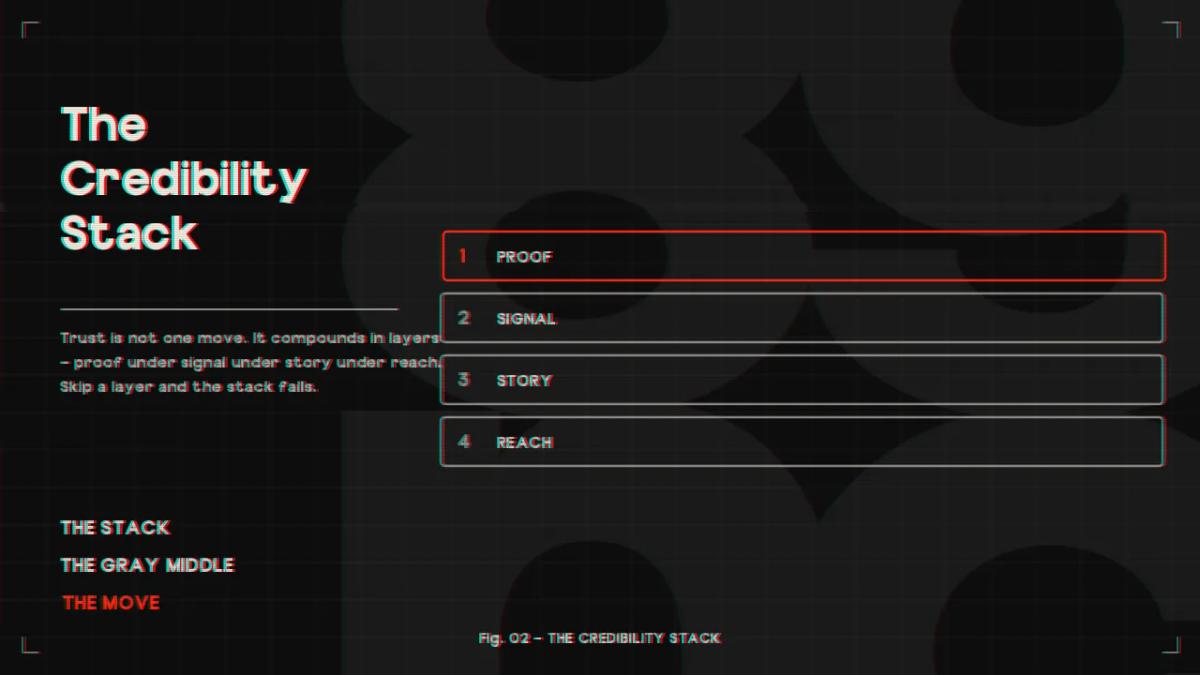
We talk about the Credibility Stack. This isn't about design awards or 12 months of navel-gazing. It's the minimum viable brand required to pass due diligence, signal safety, and maximize valuation. Brand equity preservation, plain and simple. The value you've built in your product shouldn't leak through a hole in your presentation.
If you're 6 to 18 months out from a raise, you don't need a fluff piece. You need these five assets.
Asset 1: The Verbal Identity Framework (Your "North Star")
Most founders think they have a branding problem when they actually have a clarity problem. Ask your CTO, your VP of Sales, and your Marketing Lead what the company does. Three different paragraphs? You're un-investable.
You need a verbal identity framework before you design a single pixel.
This includes:
The Core Human Truth: The emotional hook that proves you understand the customer's pain better than they do.
Market Positioning Statement: One sentence that defines your category, your audience, and your "only-ness."
Brand Manifesto: The rally cry that sets the culture.
We run stakeholder alignment workshops to drag this out of your team. We force decision-maker consensus early so you're not debating "who we are" while you should be debating term sheets. This is the foundation of your pitch.
Asset 2: The Visual Identity System (Not Just a Logo)
A logo isn't a brand. A brand is a system.
Investors get nervous when they see a "Frankenstein" brand where the deck looks modern, the product looks dated, and the website looks like a template. That signals execution risk.

You need a scalable visual identity system. This means:
Typography and Color Tokens: That work on a billboard and a mobile screen.
Motion Principles: How your brand moves (jittery? smooth? fast?).
Brand Guidelines Documentation: A cheat sheet ensuring your team doesn't break the brand the day after launch.
We build this in weeks, not months through rapid prototyping. Focus is on internal brand activation: arming your team with assets they can actually use, not a PDF gathering dust on a server.
Asset 3: The "Money Page" (High-Conversion Digital Presence)
Your homepage is your 24/7 salesman. Weak homepage, bleeding CAC.

Before we build, we run a brand touchpoint audit. Where are you losing trust? Vague messaging? Dead-end user flow?
Then we build your go-to-market digital presence. Not "pretty." A high-conversion landing page (the "Money Page") that proves you know how to acquire customers. It aligns your market positioning statement with direct-response mechanics.
Asset 4: The Competitive Gap Analysis (Your "Why Us" Visualized)
You can tell investors you're different. Or you can show them.
Asset #4 is visual proof of your market position. We run a competitive gap analysis and visualize it. Not just a 2x2 matrix. We design the visual evidence that makes your competitors look outdated, slow, or risky.
Going through a merger or pivot? This is where brand architecture restructuring comes in. We clean up the mess of sub-brands and legacy products so investors see a clean, investable platform. Not a confusing portfolio.
Asset 5: The Roadmap (Proof of Execution)
Investors invest in teams that ship.
Tell a VC you're planning a rebrand that'll take a year and they hear "capital burn." Show them a rebrand rollout roadmap that executes in 30 days and they hear "velocity."
Your Credibility Stack must include the plan for a legacy brand transition. How are you moving from Old World to New World without killing SEO or confusing current clients? That shows operational maturity.
Stop Debating, Start Sprinting
The difference between a brand refresh and a full rebrand often paralyzes founders. You don't have time for paralysis.
You need an agile brand sprint.
We can run a 3-hour brand sprint to diagnose your gaps, or execute the full 90-day Brand Ops to build your brand infrastructure. But don't walk into that boardroom naked.
Before you sprint, diagnose the issues with Brand Therapy: 7 Red Flags. Once you have your Credibility Stack, it's time to build your Revenue Engine. And here's the timeline: How We Rebrand in 90 Days.
Is your brand an asset or a liability?